Soil Erosion 10(Developments in Soil Science
by: D. Zachar
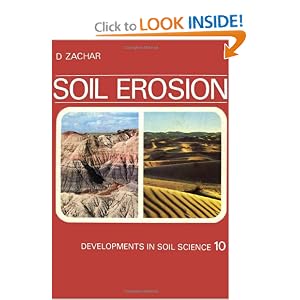
- Publisher: Elsevier Science & Technology
- Number Of Pages: 547
- ISBN-10 / ASIN: 0444997253
- ISBN-13 / EAN: 9780444997258
Soil is the basis of production in agriculture and forestry, the nourisher of
mankind and an important component of the human environment. Much more
attention should therefore be given to the soil, and greater control with respect to
its rational use, protection and improvement, needs to be exercised.
Challenging problems in soil conservation arise from the rapid growth of the
world population and the ensuing requirement for increased food production on
the one hand, and on the other, from rapid technical process giving rise to further
industrialization and urbanization which involve the deterioration, destruction,
intoxication, and contamination of the environment by industrial fumes and
various chemical substances.
General consequences of these trends are the diminishing area of fertile land
suitable for agriculture, the even more rapid decline of the per capita ratio of
cultivated land, the rising proportion of deteriorated soil attributable to human
activity, and the increase in soil levels of exogenous, often toxic substances which
reduce on an ever increasing scale the soil’s ability to perform its biotic functions in
the ecosphere, i.e. in the environment of biota.
Sufficient food for a growing population may be obtained either by applying
extensive farming techniques, i.e. by expansion of the area under cultivation, or by
applying intensive methods which provide higher crop yields for a given area as
a result of better utilization of the bioenergy potential of the soil.
Extensive farming methods which are possible mainly in sparsely populated
regions and in marginal areas of the ecumene, involve the acquisition and cultivation
of land by clearing the existing permanent vegetation cover, with little regard
for the high soil-protective effect of the latter. The soils which become subjected to
this process are usually deficient requiring high-cost improvement, are highly
susceptible to erosion, or are situated in regions affected by highly destructive
exogenous geomorphological processes attributable to the climate. Therefore the
extensive expansion of cultivated agricultural land generally increases the danger
of erosion.
Intensive farming usually involves large-scale production processes with a high
level of mechanization, a preference for monoculture with a relatively lower
protective effect on the soil, a rather narrow range of species, high doses of
industrially manufactured fertilizers, various biocidal substances (mainly herbicides,
insecticides and fungicides), and highly concentrated livestock production.
These intensive techniques on which most advanced countries depend have both
positive and negative aspects from the standpoint of soil erosion and soil conservation.
The positive aspects include decreases in the destruction normally caused by
extensive cattle grazing, by unfavourable location of fields and boundaries, inappropriate
agrotechnics, disadvantageous sitting, the building and maintenance of
dirt roads, etc. Higher doses of fertilizers may also have a positive influence,
especially natural fertilizers which increase the erosion resistance of the soil and
soil permeability, and accelerate the growth of vegetation which is the most
important factor in erosion control.
The negative aspects of intensive farming, when the latter is practised incorrectly,
include increased surface runoff, reduced erosion resistance of the soil, increased
amounts of eluates which increase the pollution of surface flows and result
in eutrophication, and, ultimately, the general deterioration of the human environment.
The same may be said of wind erosion.
A very special situation arises in those regions under direct attack from industrial
fumes which, on the one hand, cause a deterioration of the site conditions, and
therefore also of vegetation growth and, on the other, increase the level of
pollutants and the intensity of erosion in general. In such cases intensive methods
are of limited use and as a rule they tend only to increase erosion.
Intensive methods have similar effects, although on a smaller scale, in forestry.
Thus it seems that civilization, as it develops further, is going to face an
increasing danger of accelerated man-made soil erosion, with increasingly harmful
consequences for the human environment. If in the past erosion has been considered
to be a soil disease, in the future it may become known rather as a disease of
the lamkcape, to the extent of being a pedophtoric or ecophtoric phenomenon in
some regions (Greek pedon - soil, oikos - husbandry, ffora - destruction,
devastation).
Due attention should therefore be given to research in soil erosion. A characteristic
of erosion is that it starts on cultivated farmland without any visible
manifestations. When this happens, the danger is underestimated and erosion
control measures are taken only in exceptional cases, or in those cases in which
eroded soil has already lost its fertility.
Erosion control measures can be applied effectively only when the nature of the
erosion phenomena and the effectiveness of measures under particular sets of
conditions have been thoroughly studied. These questions are studied in the
recently established science of soil erosion, or soil erodology. The aim of the theory
is firstly to add to current knowledge the generalizing from the knowledge gained
by observation of erosion phenomena, also including the principles of soil conservation,
and secondly, to determine the best methods of improving the properties of
eroded soil. In practice, erosion control is connected to a greater or lesser degree
with improvement, and from the practical standpoint it is therefore possible to
speak of erosion control soil (amelioration) (Kozmenko 1954, Ziemnicki 1968).
Soil erodology as a comprehensive assemblage of scientific information on
erosion and erosion control is a young branch of science, yet the dangers of erosion
and various methods of erosion control have been known to mankind since time
immemorial. Up to the end of the 19th century this information was more or less
empirical and confined locally. Only when a sufficient amount of practical and
theoretical information had been collected, was it possible to develop a relatively
comprehensive new theory in the form of a new scientific discipline.
The development of erodology as the theory of erosion in general has been
complex, and was accelerated by specialists in many other fields. The broadest
concept of erosion was developed by geomorphologkts, geographers and geologists,
who considered erosion mainly in terms of the development of the Earth’s surface
under the influence of exogenous forces (e.g. Penck 1894, Davis 1898, 1902,
LazareviC 1973).
Pedologists began to study erosion in more concrete terms. The first to point out
the dangers of erosion was Dokuchaev (1877, 1879), the founder of pedology.
Wollny (1895) conducted the first interesting experiments on the effects of
atmospheric precipitation on soil and soil wash. Specific research on rill and sheet
erosion was first carried out by Kozmenko (1909, 1910), but the disastrous
consequences of erosion for mankind were pointed out by the American soil
conservationists Bennett and Chapline (1928). The subsequent years saw the
beginnings of broadly-based, organized soil erosion research.
The third contribution of information on soil erosion towards the incipient
erodological discipline came from the principles of torrent and avalanche control.
These principles originated in the Alpine countries in the second half of the 19th
century. The first specialists in this field were French. They, too, were the authors
of guidelines on soil conservation in mountain regions and on the control of
torrential floods (Reboisement des montagnes (1860), Gazonnement des montagnes,
1864). In addition to the works of Sure11 (1842), mention may be made of
the classical work of Demontzey (1878,1882) which became the basis for the rapid
development of torrent control in many European countries. The promulgation of
the Austro-Hungarian Act No. 117 in 1884 concerning the harmless deflection of
water from the watershed is also linked with this work. Although the authors were
mainly concerned with reducing load and protecting watercourses and watersheds
against silt deposition, they gave a lot of attention also to the characteristics of
erosion and to the erosion control.
Besides the three above-mentioned fields, specialists in other disciplines had also
significantly contributed to the establishment of the new scientific discipline of
erodology ; these specialists were water conservationists, glaciologists, geobotanists,
agronomists, foresters, and others. Hydrologists studied this phenomenon mainly
from the standpoint of the development of rivers, lakes, and the silt pollution of
water (Lopatin 1952, Makkaveev 1955), glaciologists investigated those aspects of
erosion relating to surface formations and the destruction of soil by ice, snow,
water, wind, and frost (Embleton and King 1968), geobotanists studied erosion in
terms of the relationships between site conditions and vegetation, agronomists
emphasized the importance of the conservation of agricultural land, and foresters
studied erosion from the standpoint of the protection of forest soil, especially the
improvement of forest management. Perhaps the broadest experience in soil
conservation was derived from slope terracing which in many regions is a fundamental
prerequisite of intensive agriculture.
Together with works dealing marginally with soil erosion within the bounds of
another classical discipline, attempts were made at writing specialized erodological
monographs, and later, text-books also. To date, there are tens of thousands of
erodological publications of great diversity in subject and scope, dealing with
different aspects of erosion and erosion control. Erosion phenomena and the
conditions under which they originate, as well as the possibilities for erosion
control in the various types of natural and cultivated area are so varied, that no
individual, not even a most highly skilled group of specialists are any longer
capable of producing an exhaustive work on this subject. The author for his part
believes that such a work is not in any case needed, since only a part of the
information that it would contain could be used for any one purpose. The work
presented here should be viewed from this aspect, too.
In developing the concept of the science of soil erosion, the author considered
that establishing a definition of soil erosion was of fundamental importance. The
term soil erosion, first coined in English, was introduced by McGee in 1911. Later
the first monographs on the subject appeared, among them Soil Erosion and Its
Control by Ayres in 1936, and (in Russian) the extensive Eroziya pochv (Soil
Erosion) published in 1937 by a number of co-authors. Studies in this field in other
languages appeared much later, mostly after 1947.
H. H. Bennett, the American soil conservationist is generally considered to be
the founder of the science of erosion which he introduced and established with his
work Soil Conservation published in 1939, and later with his Elements of Soil
Conservation published in 1955. In addition to these monographs a number of
important studies on the subject have been published in English, among them
works by Frewert et al. (1955), Archer (1956), Stallings (1957), Kohnke and
Bertrand (1959), and Hudson (1971).
In the USSR, major studies in this field were published by Kozmenko (1948,
1954); an important contribution was the monograph by Sobolev (1948), and
other works were published by Kocherga (1965), Zaslavskii (1966), and
Mirtskhulava (1970). In Italy, the valuable work by Oliva (1952) was published in
three editions, and in Bulgaria, the work of Biolchev (1955) is of considerable
importance. Other major contributors to the study of the subject are Motoc (1956)
in Romania, Ziemnicki and Jozefaciuk (1969, Ziemnicki (1968) in Poland,
GavriloviC (1972) in Yugoslavia, Schultze (1952), Glander (1956) in the German
Democratic Republic, Kuron (1956), Richter (1965) in the German Federal
Republic, and Furon (1947), Fournier (1960) in France.
In Czechoslovakia, where this work has been published, a number of other
monographs and text-books on soil erosion have also been written (Spirhanzl
1952, Jdva and Cablik 1954, Cablik and Jdva 1963, Zachar 1960, 1970, Holq
1970, Riedl, Zachar et al. 1973, etc.).
In this work, the author faced the task of summing up in a brief survey all that i s
known with respect to terminology, classification, methodology, erosion factors,
geography of soil erosion, and methods of erosion control in the pedosphere, being
well aware of the fact that his work would be incomplete in every respect. He
considers these questions to be fundamental in any comprehensive evaluation of
erosion and erosion control, and believes that they will become the basis for the
further development and improvement of theoretical and practical information
provided by this new discipline.
ترجمه با گوگل:
معرفی
خاک بر اساس تولید در کشاورزی و جنگلداری ، از nourisher است انسان و جزء مهمی از محیط زیست انسان است. خیلی بیشتر توجه بنابراین باید به خاک داده می شود ، کنترل بیشتر و با توجه به استفاده منطقی ، حفاظت و بهبود آن ، باید اعمال شود.
به چالش کشیدن مسائل در حفاظت خاک ناشی از رشد سریع جمعیت جهان و ensuing مورد نیاز برای تولید مواد غذایی افزایش یافته در از یک طرف ، و از سوی دیگر ، از روند سریع افزایش دادن به فنی بیشتر
صنعتی شدن و شهری شدن است که شامل زوال و نابودی ، مسمومیت و آلودگی محیط زیست توسط گازهای صنعتی و مواد شیمیایی گوناگون است.
عواقب عمومی از این روند هستند کاهش مساحت زمین بارور مناسب برای کشاورزی ، کاهش سریع حتی بیشتر از سرانه نسبت زمین کشت شده ، نسبت به افزایش از خاک بدتر شده منتسب به انسان فعالیت و افزایش در سطح خاک های بیرونی ، اغلب مواد سمی که کاهش در مقیاس فزاینده توانایی خاک را برای انجام وظایف حیاتی خود را در ecosphere ، i.e. در محیط زیست زیاگان.
غذای کافی برای جمعیت در حال رشد ممکن است به دست آمده یا با استفاده از تکنیک های کشاورزی گسترده ، یعنی با گسترش سطح زیر کشت ، و یا توسط اعمال روش های فشرده است که ارائه دهنده بازده بالاتر گندم برای منطقه به عنوان داده در نتیجه استفاده بهتری از پتانسیل bioenergy از خاک.
روش های گسترده کشاورزی که ممکن است عمدتا در جمعیت پراکنده مناطق و در مناطق مرزی از ecumene ، شامل اکتساب و سطح زیر کشت از زمین های پاکسازی شده توسط موجود پوشش گیاهی دائمی ، با توجه کمی برای خاک بالا اثر محافظتی از دومی. خاک که در معرض تبدیل به
این فرایند معمولا ناقص که نیاز به بالا بهبود هزینه هستند ، بسیار حساس به فرسایش ، و یا در مناطق تحت تاثیر واقع شده توسط بسیار مخرب فرایند های بیرونی geomorphological منتسب به آب و هوا. بنابراین
توسعه گسترده ای از زمین های کشاورزی به طور کلی کشت را افزایش می دهد خطر از فرسایش.
کشاورزی فشرده معمولا شامل بزرگ تولید با فرآیندهای مقیاس بالا سطح مکانیزاسیون ، ترجیح monoculture با کاهش نسبتا اثر محافظتی بر روی خاک ، یک رشته باریک و نه از گونه ها ، دوزهای بالایی از
تولید صنعتی کودهای ، biocidal مواد مختلف (عمدتا علف کش ، حشره کش ها و قارچ کش) ، و بسیار متمرکز تولید دام. این تکنیک های ویژه که در پیشرفته ترین کشورها بستگی دارد که هر دو
جنبه های مثبت و منفی را از نقطه نظر فرسایش خاک و حفاظت خاک. جنبه های مثبت عبارتند از کاهش ناشی از کشتار به طور معمول توسط گسترده چرای گاو ، توسط موقعیت نامساعد از زمینه ها و محدوده ، نامناسب agrotechnics ، زیان اور نشسته ، ساختمان و نگهداری
جاده های خاکی ، و غیره دوزهای بالاتر از کود نیز ممکن است تاثیر مثبت داشته باشد ، به خصوص کودهای طبیعی است که افزایش مقاومت در برابر فرسایش از خاک و نفوذ پذیری خاک ، و سرعت بخشیدن به رشد پوشش گیاهی است که بیشتر عامل مهم در کنترل فرسایش.
منفی جنبه های کشاورزی فشرده ، هنگامی که دومی با تجربه نادرست است ،
شامل افزایش رواناب سطحی ، کاهش مقاومت در برابر فرسایش خاک ، افزایش مقدار eluates را افزایش می آلودگی از جریان های سطحی و در نتیجه در eutrophication ، و در نهایت ، زوال کلی از محیط زیست انسان است. ممکن است از همان فرسایش باد ، گفته شود.
وضعیت بسیار خاص ناشی میشود در آن مناطق تحت حمله مستقیم از صنعتی
دود که از یک طرف ، باعث بدتر شدن از وضعیت سایت و
بنابراین او هم از رشد پوشش گیاهی و ، از سوی دیگر ، افزایش سطح آلاینده ها و شدت فرسایش به طور کلی. در چنین مواردی روش های فشرده استفاده از محدود می شود و به عنوان یک حکومت آنها تمایل تنها برای افزایش فرسایش. روش فشرده اثرات مشابه ، اگر چه در مقیاس کوچکتر است ، در جنگل.
بنابراین به نظر می رسد که تمدن را ، تا آن را توسعه بیشتر ، قصد دارد چهره خطر افزایش سرعت انسان ساخته فرسایش خاک ، به طور فزاینده با مضر پیامدهای برای محیط زیست بشر است. اگر در گذشته فرسایش در نظر گرفته شده است به بیماری خاک ، در آینده ممکن است شناخته شده و نه به عنوان یک بیماری lamkcape ، به حدی است که بعنوان یک پدیده و یا ecophtoric در pedophtoric
در برخی از مناطق (به یونانی pedon - خاک ، oikos - دامپروری ، ffora - تخریب ، انهدام).
توجه بنابراین باید به تحقیق در فرسایش خاک می شود داده. مشخصه فرسایش در این است که بدون هیچ گونه های زراعی قابل مشاهده شروع می شود
تظاهرات. هنگامی که این اتفاق می افتد ، خطر است گرفته نمیشود و رسایش خاک
اقدامات کنترل فقط در موارد استثنایی گرفته شده است ، و یا در مواردی است که در آن
در حال حاضر eroded خاک حاصلخیزی خود را از دست داده. کنترل فرسایش اقدامات می تواند به طور موثر بکار گرفته تنها زمانی که ماهیت
پدیده فرسایش خاک و اثر بخشی اقدامات زیر مجموعه خاص ز
شرایط شده اند کاملا مطالعه قرار گرفت. این سوال ها در مورد مطالعه هستند
به تازگی تاسیس علم فرسایش خاک ، یا خاک erodology. هدف از نظریه
است اولا به دانش فعلی generalizing از دانش به دست اورد افزودنی
با مشاهده پدیده های فرسایش ، نیز از جمله اصول حفاظت خاک ،
و در مرحله دوم ، برای تعیین بهترین روش های بهبود خواص eroded خاک. در عمل ، کنترل فرسایش به کمابیش متصل است با بهبود است ، و از نقطه نظر عملی آن است بنابراین ممکن است به
صحبت از فرسایش خاک شاهد (Amélioration) (Kozmenko 1954 ، Ziemnicki 1968). erodology خاک به عنوان یک ماشین سواری جامع از اطلاعات علمی در تاریخ فرسایش خاک و کنترل فرسایش خاک شاخه جوان علم است ، اما خطرات ناشی از فرسایش و روش های مختلف کنترل فرسایش زمان از سال به همه مردم شناخته شده است خیلی پیر. تا پایان قرن 19th است این اطلاعات بیشتر یا کمتر
تجربی محدود و محلی است. فقط هنگامی که مقدار کافی از عملی و اطلاعات جمع آوری شده نظری شده بود ، ممکن بود آن را به منظور توسعه نسبتا جامع تئوری های جدید در شکل یک نظم و انضباط جدید علمی است. توسعه erodology به عنوان تئوری از فرسایش به طور کلی شده است
پیچیده ، و توسط متخصصین در زمینه های بسیاری از دیگر شتاب گرفته بود. وسیعترین مفهوم فرسایش توسط geomorphologkts ، geographers زمین شناسان و توسعه داده شد ،که فرسایش به طور عمده از لحاظ توسعه از سطح زمین در نظر گرفته تحت تاثیر نیروهای بیرونی (به عنوان مثال Penck 1894 ، دیویس 1898 ، 1902 ، LazareviC 1973).
Pedologists شروع به مطالعه در شرایط فرسایش بیشتر بتن می باشد. اول به اشاره خطرات ناشی از فرسایش Dokuchaev بود (1877 ، 1879) ، بنیانگذار خاک شناسی. Wollny (1895) انجام آزمایش های جالب برای اولین بار در اثر بارش جوی در خاک و شستشوی خاک. پژوهش خاص در جاری شدن و ورق
فرسایش اولین بار انجام شده توسط Kozmenko به اجرا درآمد (1909 ، 1910) ، اما فاجعه
پی آمدهای ناشی از فرسایش برای مردم انجام شده توسط خاک در آمریکا اشاره شد
حفاظت از بنت و Chapline (1928). سال بعد دیدم
آغاز کلی و مبتنی بر تحقیقات فرسایش خاک سازمان یافته است.
سهم ثالث از اطلاعات در مورد فرسایش خاک به سمت بدوی
نظم و انضباط erodological آمد از اصول و کنترل torrent بهمن.
این اصول در کشورهای آلپاین در نیمه دوم 19th
قرن. متخصصان برای اولین بار در این زمینه فرانسوی بودند. آنها نیز ، نویسنده شد
از رهنمودهایی در حفاظت خاک در مناطق کوهستانی و در کنترل
سیل سیل وار (Reboisement پردازنده montagnes (1860) ، Gazonnement montagnes پردازنده ،
1864). علاوه بر آثار Sure11 (1842) ، اشاره ممکن است ساخته شده از
کار کلاسیک Demontzey (1878،1882) که مبنای سریع تبدیل شد
توسعه کنترل torrent در بسیاری از کشورهای اروپایی. ترویج و
اتریش مجارستانی قانون شماره 117 در سال 1884 مربوط به انحراف از بی ضرر
آب از حوضه های آبریز می باشد همچنین با این کار نشان میدهد. با وجودی که این نویسنده شدند
عمدتا با ظرفیت بار را کاهش و حفاظت از watercourses و watersheds نگران
در برابر رسوب لجن ، آنها داد توجه زیادی نیز به ویژگی های
فرسایش خاک و کنترل فرسایش.
علاوه بر سه زمینه های فوق الذکر ، متخصص در رشته های دیگر نیز به حال
کمک قابل توجهی به برقراری نظم و انضباط جدید علمی
erodology ؛ این متخصصان حفاظت از آب ، glaciologists ، geobotanists بودند ،
agronomists ، جنگل ، و غیره. Hydrologists مطالعه این پدیده به طور عمده
از نقطه نظر توسعه رودخانه ها ، دریاچه ها ، لجن و آلودگی از
آب (Lopatin 1952 ، Makkaveev 1955) ، glaciologists بررسی جنبه هایی از
فرسایش تشکل های مربوط به سطح و انهدام و تخریب خاک توسط یخ ، برف ،
آب ، باد و یخ (Embleton و کینگ 1968) ، مورد مطالعه قرار geobotanists فرسایش در
از لحاظ روابط بین شرایط سایت و پوشش گیاهی ، agronomists
تاکید بر اهمیت حفاظت از زمین های کشاورزی و جنگل
فرسایش خاک مورد مطالعه از نظر حفاظت خاک جنگل ، به ویژه
بهبود مدیریت جنگل. شاید یکی از وسیعترین تجربه در خاک
حفاظت از شیب terracing مشتق شده بود که در بسیاری از مناطق شده است اساسی
از پیش نیاز های کشاورزی فشرده.
خرید و فروش ، همراه با این نسخهها کار میکند حاشیه با فرسایش خاک در داخل مرزهای از
کلاسیک دیگری نظم و انضباط ، تلاش در نوشتن ساخته شد erodological تخصصی
جزوه و مقالات ، و بعد از آن ، متن کتاب هم هست. تا به امروز ، در دهها هزار وجود دارد
نشریات erodological از تنوع زیادی در موضوع و قلمرو ، با خرید و فروش
جنبه های مختلف از فرسایش خاک و کنترل فرسایش. پدیده فرسایش خاک و
که تحت آن شرایط آنها سرچشمه گرفته ، و نیز امکانات برای فرسایش
کنترل را در انواع مختلف در منطقه طبیعی و کشت آنقدر متنوع است ، که هیچ
فردی ، و نه حتی یک گروه بسیار مجرب ترین متخصصان دیگر هیچ
قادر به تولید کار مفصلی در مورد این موضوع دارد. نویسنده به نوبه خود
معتقد است که چنین کار است و در هر صورت لازم نیست ، از آنجا که تنها بخشی از
اطلاعاتی که به آن می باشد می تواند برای هر یک هدف مورد استفاده قرار گیرد. کار
ارائه شده در اینجا باید از این جنبه نگاه شود ، بیش از حد.
در حال توسعه در مفهوم علم فرسایش خاک ، نویسنده در نظر گرفته
که ایجاد تعریفی از فرسایش خاک شده است از اهمیت اساسی.
مدت فرسایش خاک ، ابتدا به زبان انگلیسی نام نهاده ، با مک گی در سال 1911 معرفی شد. بعدها
جزوه و مقالات برای اولین بار در این مورد ، در میان آنها ظاهر شد خاک و فرسایش آن
کنترل توسط Ayres در سال 1936 ، و (در روسی) گسترده Eroziya pochv خاک
فرسایش) در سال 1937 توسط تعدادی از نویسندگان این شرکت منتشر شده است. مطالعات در این زمینه در سایر
زبانهای ظاهر خیلی بعد ، که عمدتا پس از 1947.
HH بنت ، طرفدارحفظ منابع طبیعی خاک آمریکا است به طور کلی در نظر گرفته می شود
بنیانگذار علم فرسایش که به او معرفی و او را با تاسیس
کار حفاظت خاک ، منتشر شده در سال 1939 ، و بعد از آن با عناصر خود را از خاک
حفاظت در سال 1955 منتشر شد. علاوه بر این تعدادی از جزوه و مقالات
مطالعات مهم در مورد این موضوع را به زبان انگلیسی منتشر شده است ، در میان آنها
با این نسخهها کار توسط Frewert و همکاران. (1955) ، آرچر (1956) ، Stallings (1957) ، Kohnke و
برتراند (1959) ، و هادسون (1971).
در اتحاد جماهیر شوروی سابق ، مطالعات مهمی در این زمینه توسط Kozmenko (1948 منتشر شده بودند ،
1954) ؛ سهم مهم رساله توسط Sobolev (1948) ، و شد
آثار دیگر فرستاده شده توسط Kocherga (1965) ، Zaslavskii (1966) ، و منتشر شد
Mirtskhulava (1970). در ایتالیا ، کار ارزشمند توسط Oliva (1952) منتشر شد
سه نسخه ، و در بلغارستان ، کار Biolchev (1955) قابل توجه است
اهمیت. دیگر همکاران زیادی به مطالعه این موضوع هستند Motoc (1956)
در رومانی ، Ziemnicki و Jozefaciuk (1969 ، Ziemnicki (1968) در لهستان ،
GavriloviC (1972) در یوگسلاوی ، Schultze (1952) ، Glander (1956) در آلمان
جمهوری دموکراتیک ، Kuron (1956) ، ریشتر (1965) در آلمان فدرال
جمهوری ، و Furon (1947) ، Fournier (1960) در فرانسه.
در چکوسلواکی ، که این کار کرده است منتشر شده است ، تعدادی از سایر
جزوه و کتاب و متن در فرسایش خاک نیز شده است نوشته شده است (Spirhanzl
سال 1952 ، Jdva و Cablik 1954 ، Cablik و Jdva 1963 ، Zachar 1960 ، 1970 ، Holq
1970 ، Riedl ، Zachar و همکاران. سال 1973 ، و غیره).
در این اثر ، نویسنده مواجه وظیفه summing در یک بررسی مختصر تمام است که
شناخته شده با توجه به اصطلاحات ، طبقه بندی ، روش ، عوامل فرسایش ،
جغرافیای فرسایش خاک ، و روش های کنترل فرسایش در pedosphere ، در حال
و آگاهی از این واقعیت است که کار خود را که در تمام جنبه ناقص باشد. او
نظر به این سوالات در هر ارزیابی جامع از اساسی باشد
فرسایش خاک و کنترل فرسایش و معتقد است که آنها را تبدیل به مبنایی برای
توسعه و بهبود از اطلاعات نظری و عملی
ارائه شده توسط این نظم جدید است.
لینک دانلود: لینک دانلود اصلاح شد
archive password: ebooksclub.org megaupload.com
> archive password: ebooksclub.org fileserve.com
 مرجع کتابهای خاکشناسی